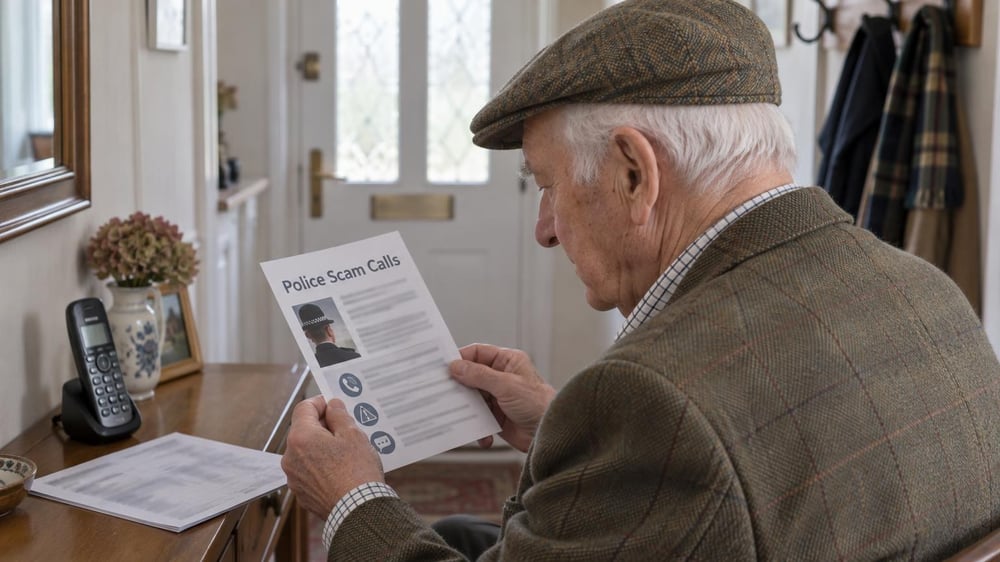
Report Fraud, the national fraud and cybercrime reporting service run by the City of London Police, said on 19 October 2026 that it had seen a spike in reports of calls from "spoofed" police force phone numbers1. The service said analysis of its data showed an increase in reports where the caller claimed to be from a police force in a variety of areas across the country1. The City of London Police, which is the National Lead Force for fraud, said it had itself taken thousands of crime reports of a similar nature1.
The service said criminals use spoofing software to hide their real caller ID and mirror the number of a legitimate organisation, so that calls or texts appear to come from a trusted body such as the police, a bank or a government agency1. The calls may use AI technology, be automated or come from a real person, and the stated aim is to trick people into sharing personal information or transferring money1. Report Fraud said callers often claim the person will be helping with an investigation by providing the details requested1.
Report Fraud said the number of calls made to it about this type of fraud is likely to be "the tip of the iceberg and a far bigger problem that is not reported, so the full scale is unknown"1. No figure for the number of reports, the amounts lost or the forces whose numbers have been mimicked has been reported1.
"Don’t trust the Caller ID display on your phone, it’s not proof of ID,"
The service also said that genuine service providers, banks and the police will never call asking someone to transfer money, share personal financial details or hand over remote control of a computer1. It said anyone who is suspicious or feels pressured should hang up and check the call is genuine by calling back on a number they know to be genuine, such as one shown on a utility bill or on the back of a card, and that people can call 159 to reach their bank or 101 for the police1.
Why it matters for households
The warning concerns anyone who receives a call that appears to come from a police force. Because the number displayed can be copied, the caller ID on a phone does not establish who is calling1. The risk described is that people give out personal or financial details, or move money, believing they are assisting an investigation1. Report Fraud has not said which forces or areas are affected, how many households have been targeted, or how much money has been lost, so the practical reach of the increase is not known beyond the service's statement that the full scale is unknown1.
What happens next
Report Fraud has set out where suspected scam calls can be reported. In England, Wales or Northern Ireland, reports can be made at reportfraud.police.uk or by calling 0300 123 2040; in Scotland, to Police Scotland on 1011. Suspected scam calls can also be reported by texting 7726 with the word "Call" and the caller's number1. No further action, deadline or update from the police or government has been announced1.
Households can read more on phishing, vishing and smishing, the Take Five and Stop! Think Fraud campaigns, and where to report a scam in England, Wales, Scotland and Northern Ireland.
 FCA Warning ListCheck whether a firm is authorised before you deal with it
 Financial Ombudsman ServiceFree, independent help when a complaint about a firm is not put right
 Citizens AdviceFree advice on money, consumer and legal problems in England and Wales
 MoneyHelperFree, impartial money and pensions guidance, set up by government