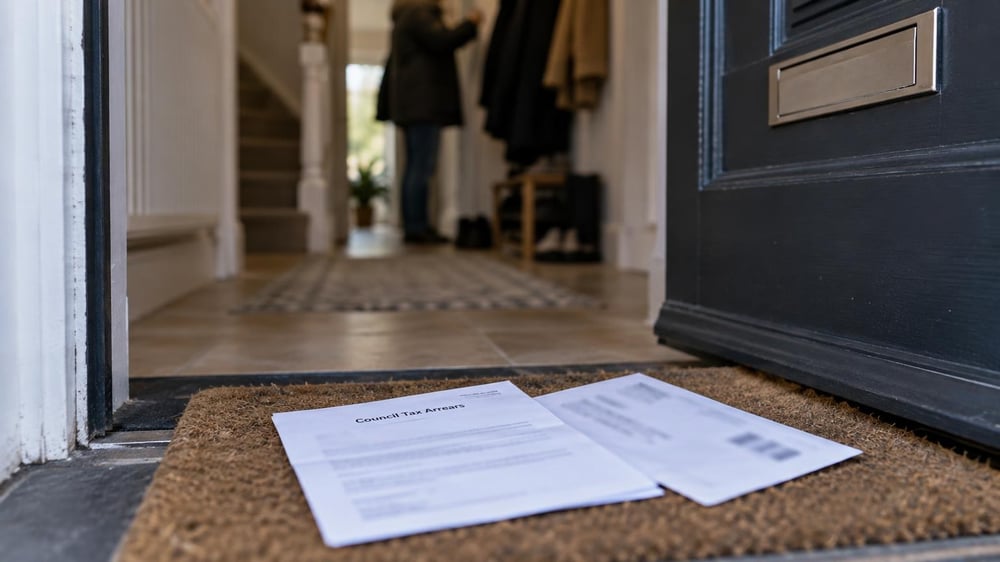
Unpaid council tax in England increased by £782 million in the 2025/26 financial year, taking total outstanding arrears to £7.4 billion, according to analysis published by the Centre for Social Justice (CSJ) on 25 October 20261. The think tank said the rise was equivalent to about £1,488 a minute, rounded to £1,5001.
The CSJ said the £7.4 billion total includes arrears built up over previous years, and that the figures are drawn from the Ministry of Housing, Communities and Local Government's Collection rates for Council Tax and non-domestic rates in England, 2025 to 20261. Separately, it said average Band D council tax in England rose by £111 to £2,392 in April 2026, an increase of 4.9 per cent, with some councils making larger rises: Worcestershire County Council increased its share by 8.98 per cent and Trafford by 7.49 per cent1.
The findings are to be published in Money Mindsets, a forthcoming CSJ report produced with Lowell and Money Wellness1. The CSJ said that report finds more than half of people in need of debt advice say they "don't know who to trust for financial help and support"1. It will recommend clearer reminder notices informed by behavioural research, greater use of digital communications alongside letters, and MoneyHelper-branded information sheets directing people in arrears to free debt advice1.
"Council tax arrears are dragging struggling households deeper into problem debt. Yet the way this debt is collected is firmly within the Government's control."
Adam Rolfe, policy and public affairs officer at Money Wellness, said council tax arrears come up in more than a third of the cases the organisation sees, and that under current rules missing one payment can mean being asked for the whole year's bill within weeks1. John Pears, chief executive of Lowell, said bills keep rising and more people cannot afford them1. Lowell's latest Financial Vulnerability Index found nearly half of households had no emergency savings1.
Why it matters for households
The arrears figure covers money owed to councils in England, and the CSJ says it includes debts accumulated over several years rather than the 2025/26 shortfall alone1. For households already behind, the report points to the collection process itself: Money Wellness says a single missed payment can lead to a demand for the full annual bill within weeks under current rules1. The CSJ's proposed changes concern how councils communicate with people who fall behind, including reminder notices and signposting to free advice, rather than the amount of council tax arrears owed1.
The government has announced that councils will be required to issue both a reminder and a final notice before households lose the right to pay in instalments, alongside extending the time before the full annual bill can be demanded1. The CSJ welcomed the changes but said additional warnings must be designed to encourage people to engage and seek help earlier1. Money Wellness said councils already have discretion to give people more time and to point them towards free debt advice at the first missed payment1. The timing of the government's changes is not reported in the material published with the analysis.
What happens next
The Money Mindsets report, produced with Lowell and Money Wellness, is forthcoming; no publication date has been reported1. It will set out a wider programme to improve financial education, creditor communications and access to debt advice1. The CSJ published its analysis ahead of the Budget; the Budget date is not given in the material1.

 GOV.UKOfficial information on tax, benefits and government services
 MoneyHelperFree, impartial money and pensions guidance, set up by government
 Citizens AdviceFree advice on money, consumer and legal problems in England and Wales
 Turn2usFree benefits calculator and grants search from a charity
 Citizens Advice ScotlandFree advice across Scotland