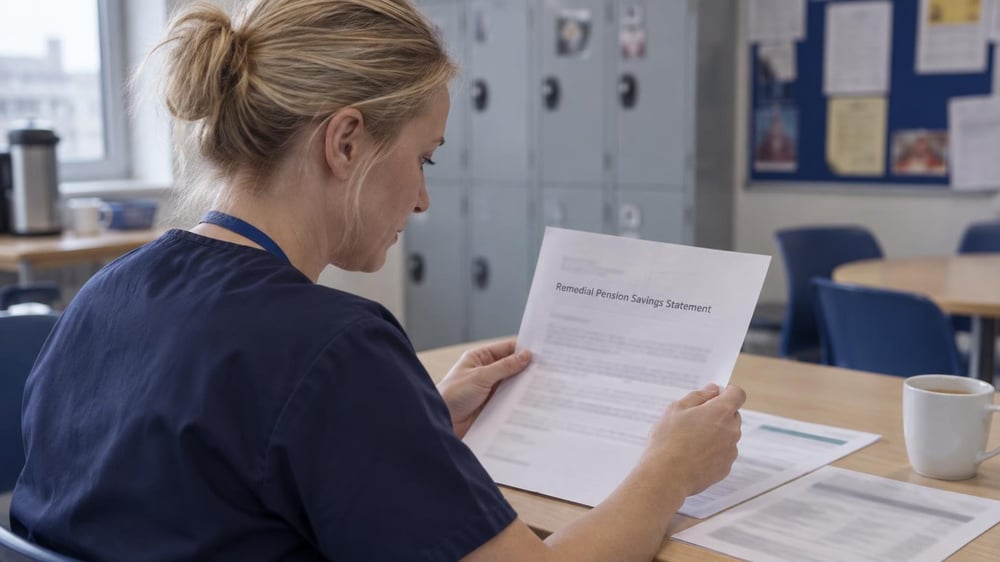
More than 128,000 remedial pension savings statements (RPSS) have been sent to NHS staff whose pension growth was recalculated under the McCloud remedy, according to figures reported on 23 October 2026. Of those, 48,725 relate to individuals who may need to take tax-related action1.
The McCloud remedy follows a court case eight years ago in which pension reforms affecting public sector workers were found to be discriminatory; the government launched the fix to amend the situation1. For affected workers, including doctors and nurses, pension growth has been recalculated for previous years, which can change the amount of tax they should have paid1. The NHS Business Services Authority (NHSBSA) administers the NHS pension scheme1.
HMRC figures show that just 18,577 submissions relating to NHS pension adjustments had been received by late September, around 30,000 fewer than the 48,725 statements identified as potentially requiring tax-related action1. The article reports that almost six in 10 cases it has helped complete have resulted in a tax refund averaging more than £15,700, while others have additional tax to pay1. It also states that tens of thousands of NHS staff could either owe a surprise tax bill or be due a rebate of around £15,0001.
The article says it is calling on the NHSBSA to urgently contact members whose statement indicates potential tax action, making clear what they need to do and the consequences of failing to act1.
"NHS staff are generally required to report extra tax they owe within three months of receiving their RPSS and can technically be fined and face penalties if they don't, although HMRC has so far taken a pragmatic approach to enforcing this deadline."
The annual allowance is the limit on what can be saved in pension pots in a tax year before tax is payable1.
| Deadline | Applies to |
|---|---|
| Three months from receiving the RPSS | Reporting extra tax owed, with penalties technically possible1 |
| 6 July 2027 | Mandatory scheme pays1 |
| 31 January 2029 | Refunds of previously paid tax, for most people1 |
| 31 January 2031 | Refunds of previously paid tax, for pensioners1 |
Why it matters for households
The statements affect NHS staff whose pension growth was recalculated, and the tax consequences run in both directions: some owe additional tax, while others are due refunds. The gap between the 48,725 statements flagged for possible tax action and the 18,577 submissions received by late September means a large number of affected members had not, by that point, filed anything with HMRC1. Those who owe tax face a reporting window of generally three months from receiving the statement, with penalties technically available to HMRC, though the article reports a pragmatic approach to enforcement so far1. Those due refunds have until 31 January 2029, or 31 January 2031 for pensioners1. Eligible NHS workers can also reclaim up to £1,000, including VAT, towards certain professional help, such as accountants, needed to calculate and report revised liabilities or claim refunds through HMRC's online service1. Background on the recalculations is in our guide to the McCloud remedy for public sector pensions, and general information is in the pensions hub.
What happens next
The article reports a call for the NHSBSA to contact members whose statements indicate potential tax action1. The next fixed date is 6 July 2027, the deadline for mandatory scheme pays; the article says that if this deadline for reporting underpaid tax is met, the pension scheme can pay the annual allowance tax bill directly to HMRC in exchange for a reduction in future retirement benefits1. No further NHSBSA response or timetable is reported.

 Pension WiseFree guidance on your options for a defined contribution pension, from age 50
 FSCSProtects your money if a bank, insurer or investment firm fails
 GOV.UKOfficial information on tax, benefits and government services