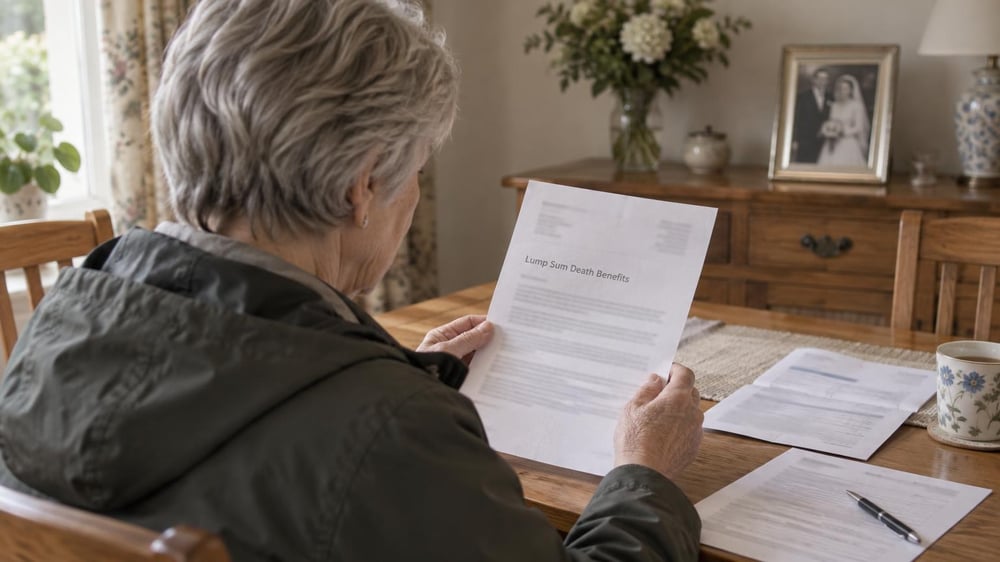
The government announced in the Autumn Budget on 28 October 2026 that it will remove the two-year rule for pension and lump sum death benefits, so that beneficiaries are no longer taxable solely because a payment is made more than two years after the member's death1. The change applies to payments made on or after 28 October 2026, regardless of when the member died, and will be introduced through Finance Bill 2026-271.
Under the previous rules, where someone died before the age of 75, lump sums and other payments were generally free of income tax only if paid within two years of the scheme administrator becoming aware of the death; if payment took longer, income tax was due at the recipient's marginal rate2. The Budget document said the move would cost around £5m in the 2026-27 tax year and then £15m a year thereafter1; HMRC estimates put the cost at £5m in 2026-27 and £15m annually over the following five financial years5. The government also confirmed it will change how tax is assessed and collected where a deceased member's lump sum death benefit allowance has been exceeded, to give beneficiaries greater certainty1. The measure will also cover certain beneficiary annuities and overseas pension arrangements, while the existing lump sum and death benefit allowance rules continue to apply5. One report gives that allowance as £1,073,1006.
The change follows correspondence between the Public Accounts Committee and the government over the Civil Service Pension Scheme (CSPS). The committee's chair, Sir Geoffrey Clifton-Brown MP, wrote to the government on 14 October 2026 about tax and death benefit payments in the scheme7. On 19 October, Sally Jamieson MP, the minister responsible for the CSPS, responded, making clear that neither the Cabinet Office nor the scheme administrator has statutory discretion under tax law to alter or waive these tax charges7. On 28 October, Torsten Bell MP, the Minister for Pensions, wrote to the committee confirming the Budget change7.
"This is a welcome announcement from government that I hope will go some way to reassuring civil service members caught up in an avoidable crisis that should never have escalated to this degree. This announcement is not to absolve Capita from processing and making payments to members of this scheme in a timely manner."
The BBC reported that Capita took over administration of the CSPS from MyCSP in December 2025, saying it inherited a backlog of more than 86,000 cases, which had grown to 120,000 by February4. According to figures up to 30 September, 1,643 outstanding bereavement or death in service cases were more than 100 days old4. The scheme manages the pensions of 1.7 million public sector workers4. The BBC reported one case in which a lump sum paid after two years was taxed at 45%, amounting to thousands of pounds4. The pensions minister said people already affected by avoidable delays and taxed as a result could seek compensation through the scheme's complaints process and the Pensions Ombudsman4.
Why it matters for households
The rule change affects anyone receiving a pension lump sum or other death benefit from a member who died before age 75, in any pension scheme, not only the civil service scheme. For payments made on or after 28 October 2026, the tax charge no longer arises simply because more than two years have passed since the scheme was told of the death1. The existing lump sum and death benefit allowance continues to apply5. Payments made before 28 October 2026 are not covered by the change; the BBC reported that a payment made days earlier was taxed at 45%4. Separately, most unused pension funds and death benefits are due to come within inheritance tax from April 20275. Our guide to what happens to your pension when you die sets out the current rules, and what happens to pensions and investment accounts when someone dies covers the wider estate position.
What happens next
The change is to be legislated for through Finance Bill 2026-271. The Public Accounts Committee said it will continue to scrutinise the civil service pensions situation and its impact7. The government has not reported a date for the Finance Bill or for the changes to assessment and collection of tax on excess lump sum death benefits.
Sources7 cited
- Budget 26: Government to remove tax rule on lump sum death benefits covermagazine.co.uk
- Budget 26: Government to get rid of two-year tax rule on lump sum death benefits professionaladviser.com
- R-CDC and guided retirement framework to be legislated for in 2027/28 Finance Bill - Pensions Age Magazine pensionsage.com
- Bereaved families will not face tax bill over pension delays under new rules - BBC News bbc.co.uk
- Two-year tax deadline on pension death benefits scrapped in Budget | Money Marketing moneymarketing.co.uk
- Bereaved families will no longer face tax hit if pension benefits take too long to process | This is Money thisismoney.co.uk
- Civil service pensions crisis: Public Accounts Committee Chair responds to Budget change - Committees - UK Parliament committees.parliament.uk

 Pension WiseFree guidance on your options for a defined contribution pension, from age 50
 FSCSProtects your money if a bank, insurer or investment firm fails
 GOV.UKOfficial information on tax, benefits and government services