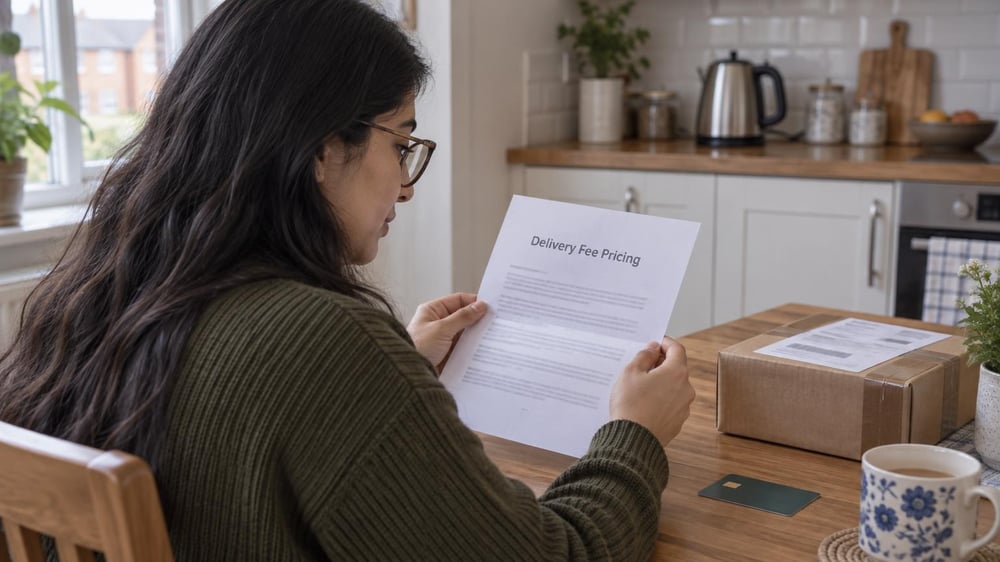
The Competition and Markets Authority (CMA) published an open letter to online retailers in the UK on 2 November 2026, reminding them that mandatory delivery fees must be included in the total price and shown to consumers up front1. The letter explains what the law means for delivery fees and what retailers need to do to comply1.
According to Skint Dad, the CMA said compulsory delivery charges must be included in the total price wherever they can reasonably be calculated, so shoppers should see the full cost when browsing products, adding items to a basket and checking out2. The warning also applies to online marketplaces, comparison websites and search engines that display retailers' prices2. Practices the CMA highlighted as potentially breaking the rules include advertising a product without a compulsory delivery charge in the total price, leaving unavoidable delivery fees out of basket totals, hiding information about optional delivery charges behind links or menus, and waiting until the final stages of checkout to explain delivery costs2. Where delivery costs depend on postcode and cannot be worked out straight away, the retailer must explain clearly how the charge is calculated and include it in the total as soon as possible; optional services such as next-day delivery can carry an extra charge provided it is explained clearly2.
"Open letter to remind online retailers in the UK that mandatory delivery fees must be included in the total price and shown to consumers up front."
The rules on compulsory charges form part of the Digital Markets, Competition and Consumers Act 2024, with the relevant consumer protections in force since April 20252. Skint Dad reports that the CMA says it has already fined four businesses more than £5.1 million in total for breaking rules on hidden charges and secured more than £1.35 million in refunds for affected customers2. The latest letter does not announce new fines against individual online retailers2. The CMA has warned it will continue checking online prices and could take action against businesses that fail to follow the rules2.
Why it matters for households
The letter restates an existing requirement rather than introducing a new one: retailers are already required to include unavoidable delivery charges in the prices they show customers2. For shoppers, the practical effect is that the price seen while browsing should be the price paid, with compulsory delivery already inside it. Skint Dad gives the example of a toy at £20 plus £4 compulsory delivery, a total of £24, against the same toy at £23 with free delivery, a total of £23, so the shop advertising the higher item price works out £1 cheaper2. The CMA says unexpected fees make it harder for shoppers to compare prices2. The letter applies to retailers, marketplaces, comparison sites and search engines displaying retailers' prices2.
What happens next
The CMA says it will continue checking online prices and could take action against businesses that fail to follow the rules2. Shoppers who are unhappy with a response from a retailer can seek consumer advice; in England and Wales, Citizens Advice can pass complaints to Trading Standards, while Scotland and Northern Ireland have their own consumer advice services2. Reporting a misleading price does not automatically mean a refund2. The regulation and policy hub covers how consumer rules are enforced, and who speaks for consumers sets out the bodies involved.

 Financial Ombudsman ServiceFree, independent help when a complaint about a firm is not put right
 FSCSProtects your money if a bank, insurer or investment firm fails
 FCA Warning ListCheck whether a firm is authorised before you deal with it
 MoneyHelperFree, impartial money and pensions guidance, set up by government
 Citizens AdviceFree advice on money, consumer and legal problems in England and Wales